Showing posts with label Bird. Show all posts

Saturday, November 29, 2014

Do You Know Why The Caged Bird Sings? Bird Cages


The Bird Cage
The Bird Cage (Photo credit: Wikipedia)
English: A man holds a cage where there is a s...
English: A man holds a cage where there is a small bird. Nanjing, China. (Photo credit: Wikipedia)
A pet Sun Parakeet (also known as a Sun Conure...
A pet Sun Parakeet (also known as a Sun Conure) in parrot cage. (Photo credit: Wikipedia)
English: Cuban Parrot (Amazona leucocephala) i...
English: Cuban Parrot (Amazona leucocephala) in Cuba (2007). Pet parrots. (Photo credit: Wikipedia)
Home is where the heart is, isnt it? Ever thought about those who have no home and make us feel good daily as we enjoy their music and admire their beauty. Shouldnt they also have a beautiful place of their own? Yes, we are talking about the birds whose melodies we wake to every morning and who warm our hearts. These pretty creatures have their nests perched on trees and shrubs. However, when the humans have started keeping birds as pets, the pretty birds do not have the luxury of having their own nests. This is how the concept of birdcages came into being. Since birdcages are the only option that we humans have for them, why not make it beautiful?
Types of Birdcages
There are many kinds of birdcages available t day for the birds. Since birds can be classified into three sizes, small, medium and large, cages are also provided in the same way (i.e., small, medium, and large). It is true that no one else but you knows the best your bird requires, so youre always advised to get your birdcage designed as an acrylic bird cage which is ideal for any bird that you may own. The birdcages come in variety of designs and materials, including the manzanita, ribbon wood, grape wood and acrylic perches. Aside from that, you can buy bird toys for your bird/s to play with. You can also make sure they have a wide variety of food to eat.
Decorating Your Birds Home
Select the birdcage that is easy to clean. For this you can place a tray into the cage, which you can remove easily when you need to wash it off. You can also make sure your birds get their well-deserved rest by purchasing a cover to place over their cage at night. You can buy lots of toys and hanging materials to enhance the looks and charm of their home. For example, you can give put a ladder in their cage that they can walk up and down on. Just make sure you keep the cage easy to clean.

Thursday, November 20, 2014

Is a Parakeet Your Ideal Pet Bird?

English: Budgerigars, Melopsittacus undulatus....
English: Budgerigars, Melopsittacus undulatus. Three on a perch. The bird on the left is an 'English Budgie', the result of generations of selective breeding by humans for desirable traits including size - whilst the other two birds exhibit the body form (but not plumage colour) of wild Budgerigars and are sometimes known as 'wild-type', or 'American Parakeets' in aviculture. (Photo credit: Wikipedia)
Feral Parrots in San Francisco
Feral Parrots in San Francisco (Photo credit: Wikipedia)
Female pet Monk Parakeet
Female pet Monk Parakeet (Photo credit: Wikipedia)
The parakeet is synonymous Budgie or Budgerigar. Budgies is a group of birds that originated in Australia, Asia, Africa South America and Central America. There are one hundred and twenty different species of parakeets.
Parakeets belong to a larger family of birds that Parrots also belong. The difference between Parakeets and Parrots is they have more diminutive bodies and medium to long tapered tail wings. Parakeets are social birds in the wild. They enjoy the company of humans and other birds in captivity.
Parakeets have peaks that have a unique hook that allows them to easily access seeds and fruit that makes up the majority of their natural diet. Parakettes are easier to sex than other birds because the cere at the top of their beak has coloration that can be used to determine with ones are male and female.
Most parakeets have cheerful disposition and make wonderful pets ,especially if handled early. There are many different types you can choose from for pet birds. The Budgie parakeet is from Australia which boosts over thirty different varieties of the bird.
Central and South America are home to the Quaker Parakeet that is becoming very popular in the U.S.
Pet stores, private breeders, commercial centers of the bird or bird shows can some of the best place to obtain a parakeet. Still before you select a bird you need to try to get some idea about the health and quality of the parakeet. Below is a list of things you should look for when selecting your new Parakeet.
1. Good appetite.
2. Vertical position.
3. Active movement.
4. A clean cere (the area above the beak that covers the windows of the nose of the birds).
5. Bright eyes.
6. Clean legs and rear section
7. Feathers that lay flat.
When you bring home the Parakeet, own other birds you may want to quarantine your new bird for a month. Remember to wash your hands between the feeding of the different birds. This is all to make sure you are not bring home any new diseases from the birds at the store you purchase your new parakeet from.
When you buy your parakeet you will need the following essentials.
1. A cage.
2. Two small bowls for water and seed
3. Perches of various sizes. Several perches; of various diameters and materials.
4. A brush to clean the cage and perches.
5. Quality of fresh seed mixture.
6. a spray of millet!
7. Supplements the breeder or store owner recommended for your bird.
8. A variety of parakeet safe toys
9. A towel or a sheet to cover the cage.
Parakeet cages
The Parakeets, an, require appropriate cage. The ideal cage fashioned for small birds, with narrow gaps between the bars of the cage. Get the largest cage you can .. Your bird should have enough space to their wings completely. The cage should have a swing, and at least small two perches. You should keep a cuttle bone in the cage so you bird can keep its beak in shape. The right cage has a bottom drawer of so it is easier to keep the floor clean. Place newspapers or paper bird down at the bottom catch the bird dripping..A cage floor between the floor and your parakeet will keep it much cleaner.
Parakeet Feeding
Parakeets need daily fresh food and water. Buy a good mix of seeds fashioned for parakeets. You should use vitamin drops if you have been advised too and bird gravel to help with digestion. Parakeets are susceptible to a variety of health issues. A major one is diarrhea. To avoid diarrhea do not give your bird people foods. Even lettuces can cause your bird to become ill. If you bird does develop diarrhea due to diet change call the vet for anti -diarrheal medicine made for parakeets'.

You will want to get a book about all the details of how to care for your new parakeet. Most of it you will find is common sense and easy to do. Parakeets can make wonderful pets for children over 10 who understand how delicate a bird can be. Parakeets are ideal for apartments and other living spaces where having pets like cats and dogs is impractical. They may not play fetch but they can learn tricks and are more social than fish.

Thursday, October 23, 2014

Metal Poisoning And Your Pet Bird


English: The bird-cage
English: The bird-cage (Photo credit: Wikipedia)


.
When you own a pet bird, you know that there are always going to be things that you should look out for, and things that you have to be careful of so that your bird doesn’t get sick or injured. You always want to be on the lookout for things that will help your bird be happy and healthy, and you never want to be in a situation where you have done anything careless that is going to let your pet bird become sick. Birds and metal poisoning is something that you want to keep in mind when you own pet birds.

Many times, people keep their pet birds in cages that are designed just for them. This is the best way to do this, as the manufacturers of the birdcages are going to be sure to use proper things in the birdcage – things that aren’t going to make your bird sick. You should always keep your pet birds in a cage that is designed for them. First of all, they are going to be less likely to get out, and second of all, you know that the cage has been built and designed to hold pet birds, and therefore is not going to be harmful in any way.

If you keep your pet bird somewhere other than a bird cage, or if you let your pet bird roam in your house without supervising them, you always run the risk of having your bird be poisoned by something. Like any other animal, a bird will explore his surroundings, and might be tempted to nibble on the bars of a cage, or on something in your home. If there are metals that are unhealthy for birds, you might find yourself with a very sick bird.
A pet Sun Parakeet (also known as a Sun Conure...
The best way to avoid metal poisoning in your pet bird is to make sure that you are keeping your bird either in a cage that is designed for him, or that you have gone to the trouble to research your cage’s materials to be sure that they aren’t going to harm your bird. Also, you have to be sure to supervise your pet bird very much when he is out of the cage to be sure that he doesn’t get into anything he shouldn’t. A good way to do this is to bird proof the room that he will be in, and to make sure that nothing in that room is going to harm him. Then, while he is out, be sure to keep a good eye on him so he doesn’t get into trouble.


Saturday, October 11, 2014

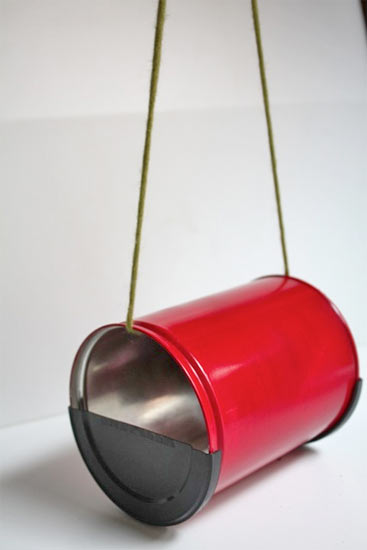
Don't Kick The Can ! Make a Bird Feeder Instead

English: Cuckoo Lane Tree and Bird Feeder At l...
English: Cuckoo Lane Tree and Bird Feeder At least that looks what the tin on a tripod is for. (Photo credit: Wikipedia)

English: Red-headed Woodpecker (Melanerpes ery...
English: Red-headed Woodpecker (Melanerpes erythrocephalus). Canada Rondeau Provincial Park, Ontario, Canada. Image collected at the feeders behind the Visitor Centre. Français : Pic à tête rouge. Parc provincial Rondeau, Ontario, Canada. Cliché pris aux mangeoires situées derrière le centre d'accueuil des visiteurs. 日本語: ズアカキツツキ (Photo credit: Wikipedia)


Many of us enjoy watching birds in our back yards. The amount of feeders available really allows us to draw very specific birds to our back yards. If you are just looking to start bird watching while you sip your morning coffee then you may want to start off by making your own bird feeder.
 Making a bird feeder in the fall is a great way to start teaching your kids about birds in your area. It is a great family project to put together a bird feeder . It helps teach the kids and grandkids about caring for wildlife and recycling in you make a simple can feeder.


Sometimes the best feeders for birds are made from the simplest items. You can begin by using an empty coffee can. Clean the inside of the can and strip the label from the outside. At this point, you can choose to paint the can if you like, but leave the inside unpainted. Colors of red, yellow, and orange will attract some bird species. Other species may not care what color your bird feeder is, as they have no known color preferences. After the paint dries completely, find a hard plastic plate that will allow the can to fit nicely in its center.

Before attaching the can however, you will need to cut a few holes into it. The first hole should be at the top edge of the can. This will allow the food to spill out when the can is upside down. The next hole should be at the bottom of the can, in the center. This will allow you to fill the can with seed when it is turned upside down. After cutting the holes, turn the can upside down onto the middle of the plate and use super glue or a hot glue gun to glue the two together. There should be a rim of plate around the can to give the birds something to perch upon.

When you are finished, you will need to find a way to attach the feeder to your tree or other area. If the feeder is just sitting on a stump or a porch, then you can skip this step. If you want the feeder to hang from a tree, you will need a small chain and S hook. You can cut another hole in the can to loop the chain through and attach the S hook at the end of the chain. Then attach your feeder to the tree. If your feeder is really light weight, you can also use fishing line to attach it to the tree.

Be sure to clean out the feeder for the birds at least once every two weeks. This will allow the feeder to be fresh and appealing and keep the birds coming to your home. You can refill the feeder as needed. If you fill the feeder and attract no birds, you may want to change the type of seed you filled it with. Some birds prefer specific types of seeds, so you can try this to attract more birds. Just remember to have fun and enjoy the simple things in life that nature has to offer!


English: Birds around a bird feeder made from ...
English: Birds around a bird feeder made from a Coke bottle in Johannesburg, South Africa. From left to right, a male Southern Masked Weaver, a male Cape Sparrow, a female Cape Sparrows, and two male Cape Sparrows. It is midwinter, so the birds are in on-breeding plumage. (Photo credit: Wikipedia)

Copied with permission from: http://plrplr.com/43556/how-to-make-interesting-can-feeders-for-birds/

Saturday, September 27, 2014

Preventing Accidents and Illness For Your Pet Cockatiel

A pet Cockatiel standing by the open cage door.
A pet Cockatiel standing by the open cage door. (Photo credit: Wikipedia)
English: Cockatiel, Nymphicus hollandicus and ...
English: Cockatiel, Nymphicus hollandicus and Budgerigar, Melopsittacus undulatus fighting on a perch. (Photo credit: Wikipedia)

How to Prevent Accidents and Illness in Your Pet Cockatiel

Preventing accidents and illness with your cockatiel just takes a little forethought. When purchasing a treats and toys carefully look at them as you would for something you were buying a younger child. Not all birds' toys are created equal. Consider if metal or plastic parts will come loose with your cockatiel is playing with it. If your bird is particularly aggressive with toys you will want to make sure you purchase toys that do not have parts that will come loose when stressed by the bird's beak.
You also need to look over any environment that you plan to let your cockatiel loose in .
You will need to look at the room with the eyes of a small curious child who happens to be able to fly and climb. Make sure doors and windows are shut. Make sure the family cat is out of the room. Cabinets and tight enclosed areas should be covered to avoid having your curious bird get stuck in them. Your bird may have issues with windows if they are not used to them. Pull the shades; until you know your cockatiel knows that the window is not an open door to the outside. The best rule of thumb is to never leave your bird unsupervised for even a short period of time.
Preventing illness in your pet cockatiel really centers on cleanliness. You need to change the papers in the bottom of the cage daily. You should once a week the bottom tray; should be washed with a mild soap and hot water. Some people advocate using disinfectant. Strong fumes can be dangerous to your bird, so only use strong disinfectant in another room and rise the tray several times to make sure your cockatiel has not exposure to the chemicals. When you wash the tray weekly; also wash toys, food dishes, and removable perches. If you bird has made an obvious mesh on a perch just wipe it off with a damp paper towel during your daily cleaning. It is a good habit to rinse water and food dishes and dry them out every time you feed. Daily eminence makes weekly clean up a breeze.
Your bird benefits from bathing as well. The best thing to do is simply put a shallow bowl in bottom of the cage for a half hour a couple of times a week. Most cockatiels will bathe themselves. Some people bath their birds with the sprayer in the kitchen sink. This is fine if your bird will not take off and get into trouble in the middle of a bath and you can absolutely control the water temperature. Water that is too hot will kill your bird. You also must be sure the room is free of drafts when you bath your bird. An alternative to a shower is a spray bottle bath. These are fine if your cockatiel is not stressed by the spray bottle as many birds are.
Feeding your cockatiel a good diet, accident prevention, and cage cleanliness will assure that your bird suffers from very few accidents and illness. It is also a good idea to provide you bird with some climbing toys to be a proper amount of excursive when you can not have them outside the cage. Change the drinking water often especially, if you have more than one bird in the cage as no one wants to drink toilet water and they will contaminate the water dish over the course of the day.
Your bird can live a healthy life for years with a little common sense and effort on your part.

Tuesday, September 23, 2014

Getting Gabby with Your Cockatiel


Cockatiel yawning

A cockatiel, Early, offering his head to be pe...
A cockatiel, Early, offering his head to be petted. (Photo credit: Wikipedia)
Half the fun of owning a cockatiel is teaching them to talk. You should keep in mind that some individual birds are more adept at talking than others. This is one reason you will really want to get to know and bond with your cockatiel before you try to teach it its first word. Your bird will be more teachable if it is not tired or stressed. You will want to teach your cockatiel in sessions when the bird is happy and relaxed.
If you show perseverance in teaching your cockatiel to talk then be assured even an older bird can learn to mimic a few words. You should prepare your cockatiel for its first talking lesson by putting the bird in an environment where it will not be distracted by other pets and noisy children. You should also turn off competing noise such as televisions and radios. You need to approach the bird with no abrupt movements and speak to it in a soft voice. Using a soft voice is important because when you start teaching your bird the first word you want it to learn you will be saying the word distinctly and louder than the voice you normally use with your cockatiel.
Normally you will want to keep the bird in a location where there is activity to keep the bird intellectually stimulated, but not overwhelmed. If you can not clear the room the bird normally stays in then moves the bird cage to a different quieter space. Give the bird a few moments to take in its quieter surroundings. Then focus the cockatiel's attention towards you.
The sex of the cockatiel has nothing to do with its ability to learn to talk. Cockatiels of both sexes learn to talk at about the same rate. Age does make a difference. Younger cockatiels will learn to speak faster than older birds. It is important to realize the bird does not understand the word it learns to speak. The cockatiel mimics words it hears by rote. You may have noticed that your cockatiel will mimic the birds it hears in the morning when it is near an open window. These sounds are the most natural sounds for your cockatiel to mimic. It is sometimes easier to teach to birds to whistle a familiar tune than teach it to speak a word in English. If you find whistling annoying then you should not encourage it. Some experts feel whistling impedes the birds desire to learn to speak.
Some bird trainers advocate training the bird on a perch outside of the cage in front of the trainers face. Others advocate training the cockatiel with the cage covered. There are merits to both methods as they both focus the cockatiel on your voice. Pick only one word to teach to bird and repeat it several times in a strong intonation. Introducing more than one word at a time will confuse your bird. The bird must understand the sound as distinct and separate from the other sounds it hears on a daily basis. This word need to stand out from all the household background noise. Ideally you should work with your bird for at least 20 minutes twice a day to teach it its first word. Once you bird associates repeating this word with positive attention from you they will repeat it again and again. Once the bird recognizes that it pleases you to repeat certain sounds the next word you teach you bird will be repeated much sooner.
It normally takes several weeks for even a young eager cockatiel to learn to repeat words. The bird's name is often a good first word, Avoid teaching your bird swear words. It may be funny at first but unless you want that word repeated in front of house guests you will regret teaching your bird to swear. Sometimes cockatiel will repeat swear word because that are usually distinct words from the one's they usually hear and are normally say=id by a person with great gusto.

Patience and perseverance are really the only really proven ingredients to get you cockatiel to talk. I have heard people who have not taught their birds to talk that they often will mimic common sounds like the vacuum or the yelping of a small dog. Some of the sounds cockatiels make are a hissing noise when they feel threatened. My two cockatiels whistle the Andy of Mayberry song and make money sounds when they see the dog. I have no idea where the monkey sounds came from. They also do a kissing noise when you ask them for a kiss. We are working on them saying the phrase ", cats are stupid." So far the male bird Captain Morgan say's "cats" and Marie the female just swings and sings and makes kiss noises when you repeat "cats". It is fairly evident to me that the process of learning to talk varies a great deal from bird to bird.

Monday, September 15, 2014

How To Give a Cockatiel A Bath

Cartoon of 2 birds talking about a bird bath.
Cartoon of 2 birds talking about a bird bath. (Photo credit: Wikipedia)
Nymphensittich-Hahn-Wildfarben
Nymphensittich-Hahn-Wildfarben (Photo credit: Wikipedia)
Green Naped Lorikeet in a Bird bath in the Chi...
Green Naped Lorikeet in a Bird bath in the Children's zoo at the Saint Louis Zoological Park, St. Louis, Missouri (Photo credit: Wikipedia)
Most cockatiel owners know that cleanliness is essential and wash their bird's cage and accessories on a regular basis. But did you know your feathered friends benefit from a cockatiel birdie bath as well?
Cockatiels came originally from semi arid regions , but still in the wild they have been seen bathing and preening in small pools of water. Cockatiels get a regular bath from Mother Nature in the form of rain as well. These birds then preen with a bit of oil they get from a gland underneath the base of their tail. Cockatiels spread the oil with their beaks.
There are many options that a cockatiel owner can use to give their bird a bath. One is to use a shallow bowl. The bowl should be heavy enough to avoid accidental spills. There are red clay bowls or deep set plates that people use to catch excess water under potted plants. These red clay bowls are available at most garden shops and work very well in the bottom of most cages as bird baths. You simply place this bowl with room temperature water in the cage every few days for about a half an hour and your cockatiels should bath themselves.
Some people like to spray their cockatiels with the kitchen dish sprayer. This is fine as long as you check to water temperature before you shower your birds. Many cockatiels prefer this method of bathing, but there is risk involved. If you keep your bird loose , and go to wash a pan with hot water the bird may tragically burn itself trying to steal a shower. Definitely wash dishes when your birds are securely in their cage , if your cockatiel views the kitchen sink as his private bird bath.
Plant misters and other spray water bottles can be used to give your cockatiel a shower. 
Buy one specifically for the purpose and do not recycle an old spray bottle that may have contained cleaning chemicals. Plastic spray bottles inevitably absorb small amounts of the chemicals that that once held. Repeated exposure to even small amounts of toxic substances can cause your bird to become ill.
My younger son showers with his birds. This is fine for a positive interaction time with your birds , but you must be able to deal with taking a luke warm shower to avoid scalding the cockatiel. You should also remove shampoo and soaps from the shower that your bird may get into . Remember , that bar of white ivory will look like a cuddle bone to your bird in the shower. You also must avoid drafts to keep your bird from becoming ill. Showers with you cockatiel are probably left as an occasional treat for your bird and not something you should do on a regular basis.

Finding the right method to allow your cockatiel to take a bird bath is one of the essential care you will provide your bird to keep them happy and healthy. Observe you bird bath and preen when you can. Excessive preening can be a sign of a physical problem or stress that can be dangerous for your bird. It is a good idea to know what your birds beauty routine looks like so you can note any significant changes.

Tuesday, September 9, 2014

Things To Think About Before You Buy A Pet Bird

English: Budgerigar (Melopsittacus undulatus)....
English: Budgerigar (Melopsittacus undulatus). Pet bird named Sophie on a cage. (Photo credit: Wikipedia)
A pet Sun Parakeet (also known as a Sun Conure...
A pet Sun Parakeet (also known as a Sun Conure) in parrot cage. (Photo credit: Wikipedia)
A pet Congo African Grey Parrot in India.
A pet Congo African Grey Parrot in India. (Photo credit: Wikipedia)

By Lee Dobbins

While a bird is an easy pet to care for, they do require just as much commitment and preparation as any other type of pet.  Whether you are buying a small parakeet or an large parrot, you should make sure that you are prepared to care for your new feathered friend properly.

One thing that all pets, including birds need is attention.  If your schedule has you working long hours and not spending much time at home, perhaps you should consider a fish tank instead of a bird.  A bird cannot be left in it's cage alone all the time and still be expected to be friendly on the odd days when you feel like playing with it.  Some birds require more interaction than others, but they are social creatures and need you to set aside some time each day to play with them.  You can use this time to teach them tricks and strengthen the bond between you.

When considering bringing a bird into your home, you must think about the safety of your new pet.  Are there other pets in the house that could be threatening to the bird?  Are there tiny nooks and crannies that a bird could get into and hurt himself?  Do the other members of your family leave the windows and doors open where the bird could fly out and be lost?  All these things must be considered for the safety of your new pet

The purchase and placement of his cage is another consideration.  You must buy a cage that is the right size for your bird.  Many parrots become quite adept at opening their own cage doors so you should consider how easy the cage is to break out of.  The cage should be made out of a safe material and have bars spaced in such a way that the bird cannot get his head stuck in between them.  There should be no sharp edges and their should be appropriate food and water dishes as well as perches inside the cage.  Cages can be expensive, but don't skimp on this as it is your pets new home!

Before you buy the cage, consider where you will be keeping it.  It is best if the cage can be in a quiet corner but near family activities as your bird really wants to be part of the family.  You should keep it out of direct sunlight, and away from any drafts or anywhere that could have a sudden change in temperature like in front of the heater or air conditions.  Avoid placing the cage in the kitchen as fumes and hot surfaces can be hazardous.  Be aware that the fumes from nonstick pans can be deadly to a pet bird, so make sure you get rid of all your non stick pans before bringing your bird home.  Of course, you will want to keep the cage out of the path of traffic so you need to buy a cage that is the appropriate size for your bird as well as the right size to fit in the intended area.

Depending on the size of your bird, you may want to consider the level of noise that he will produce.  Parakeets make little chirpy noises that, for the most part, are not annoying.  Conures, on the other hand have a shrill call that goes right through you.  Most happy birds will not yell constantly, but it is natural for them to call out at times so make sure you (and your neighbors) can handle the level of noise produced by the bird.

Finally, make sure that you want to commit to the care that is necessary to have a happy healthy bird.  You'll need to clean out the cage daily and make sure you provide fresh food and water.  Food your bird a varied diet and have him checked by a vet (preferably one who specializes in birds) every year.

Birds can be very rewarding pets and take minimal care but they must be provided with a comfortable and safe environment and your companionship in order to thrive.  Many birds can live for 20 years or more, so you are making a long commitment when you bring home your new feathered friend.   This commitment to care and companionship is well worth it, however, as the rewards of owning these enchanting creatures are many!

Lee Dobbins is owner and editor of [http://www.epet-center.com]ePet Pet Center where you can find information on every type of pet including [http://www.epet-center.com/pet-birds.html]pet birds.

Article Source: [http://EzineArticles.com/?Things-To-Think-About-Before-You-Buy-A-Pet-Bird&id=30787] Things To Think About Before You Buy A Pet Bird